Basic needs
Food pantry, clothing bank, hygiene kits and transportation.
Keys of Her Own. A brighter tomorrow.
Our model
Housing creates safety. Healing, childcare, work and community create the conditions for independence to last.
Housing
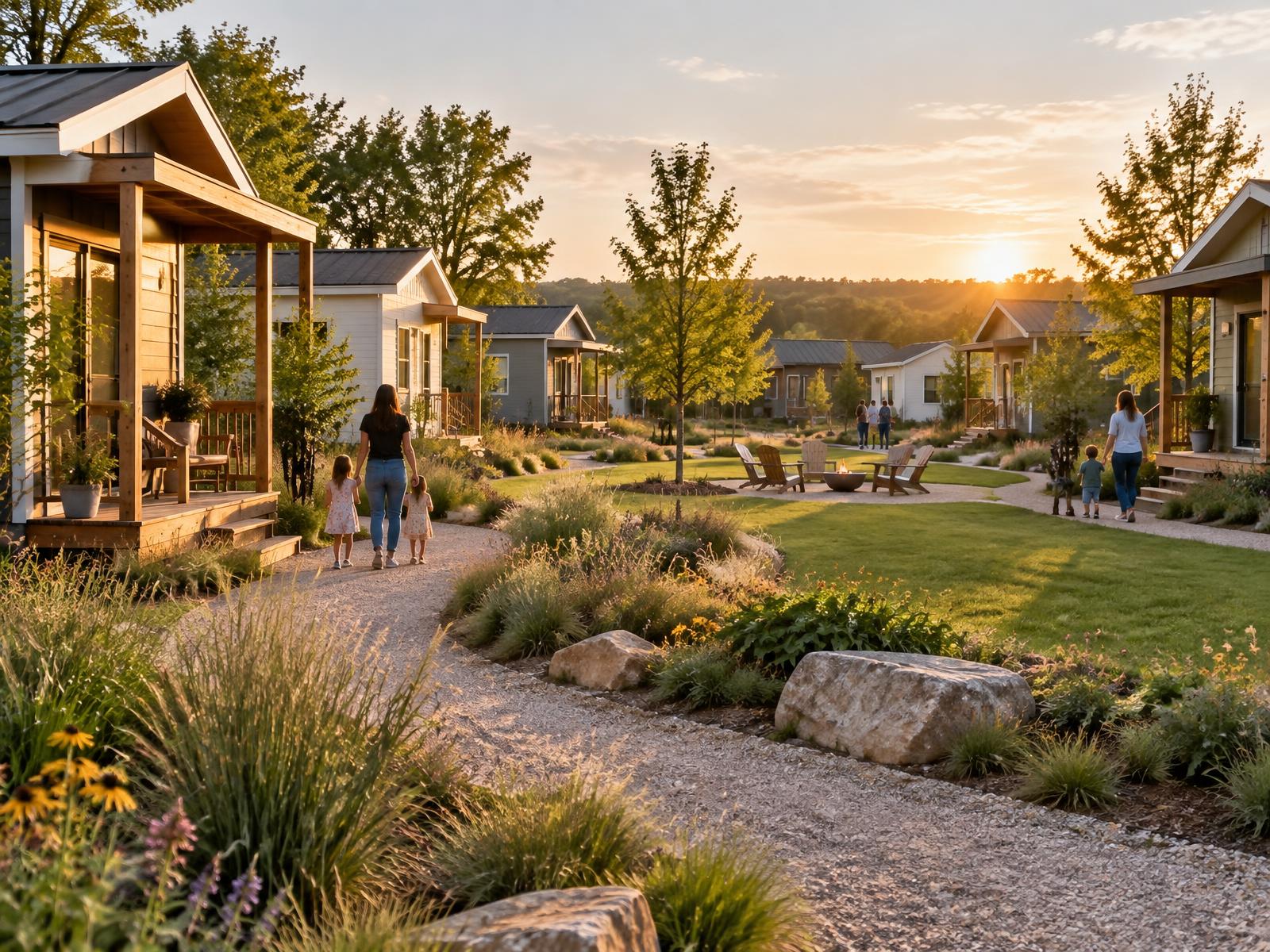
300–400
square feet per eco-friendly home
12 homes
per cul-de-sac for connection and safety
85% AMI
the proposed rent cap, supported by HUD funding
Shared spaces
for meals, recreation, gardening, fitness and childcare
Wrap-around support
The program responds to practical needs and long-term goals together, so progress in one area is supported by the others.
Food pantry, clothing bank, hygiene kits and transportation.
Trauma-informed therapy, addiction recovery and health services.
On-site childcare so mothers can train, study or work.
Vocational training, entrepreneurship, financial literacy and job placement.
The two-year path
Day 1–6 months
Up to three RTT sessions with a certified therapist and six months of coaching with a Napoleon Hill coach.
The first year
Complimentary access to all coaching programs, online and live, with goal setting and the discipline to pursue them.
After year one
Become an ambassador or coach, or own a business with professional sales training. She can also work in the drone manufacturing facility or be supported into meaningful employment.
Graduation
After up to two years of housing, development and services, she houses herself and helps the next woman. We plan to partner with Habitat for Humanity so she can own a permanent home.
Sustainable by design
Not only donations and grants: fees and rent are planned to create ongoing cash flow.
HUD HOME funds, about 40% of project cost
Government grants
Philanthropic foundations and donations
Corporate adopt-a-home sponsorships
Private and impact investment
Developer fee: 10% of each project budget
Rental income: Section 8, HOME TBRA and tenants
Property management fees: 5–10% of rent
Social enterprises, rent-to-own and training contracts
Giving back: The Women's Collective contributes a percentage of all profits from the sales of its products and services to Keys of Her Own.
Begin a conversation
Help create the safety, support and opportunity that turn one key into a lifelong foundation.